Top things to do near the Colosseum
The Colosseum isn’t just a monument; it’s the gateway to the heart of Ancient Rome. Within a short stroll, you'll find a dense cluster of world-class archaeological sites and museums, making it easy to see the best of the city on foot.
By planning to visit several sites around the Colosseum, you can make the most of your time, gain a deeper understanding of the historical context, and enjoy a richer experience than if you only visited the amphitheatre.
Roman Forum and Palatine Hill
The Roman Forum, one of Rome’s most important archaeological sites, lies right next to the Colosseum. The ancient city's political, religious and commercial life centred right here.
Wandering through the ruins of temples and basilicas brings the history of the Colosseum to life, placing the amphitheater in its true imperial context.
Overlooking the Roman Forum, the Palatine Hill is considered the site of Rome’s first settlement. Today, it is an archaeological site featuring the remains of imperial palaces, panoramic terraces and extensive green spaces.
From the Palatine Hill, visitors can enjoy splendid views of the Forum and the Circus Maximus. It is an ideal place to stop for those who want to alternate exploring archaeology with enjoying some peace and quiet away from the constant flow of visitors.

Visit the Colosseum, the Roman Forum and the Palatine Hill with a single ticket
Explore the heart of ancient Rome after visiting the Colosseum.
Book your visitThe Arch of Constantine
Located between the Colosseum and the Palatine Hill, the Arch of Constantine is one of the best-preserved monuments of ancient Rome. This impressive triumphal arch was built to commemorate Emperor Constantine’s victory, and is a notable example of late-imperial Roman art.
Thanks to its strategic location, the arch is the perfect place from which to take panoramic photographs of the amphitheatre.
Domus Aurea
The Domus Aurea is located on the Oppian Hill, close to the Colosseum. This monumental residence was built by Emperor Nero following the Great Fire of Rome.
Access is via organized tours, which allow visitors to explore the decorated underground chambers and learn about the history of this fascinating ancient Roman complex. It’s a must-see for those looking to go beyond the classic tourist trail and discover Rome’s literal underground history.
Book your visit to the Domus Area
Basilica of San Clemente
Just a few minutes’ walk from the Colosseum lies the Basilica of San Clemente, a unique site thanks to its multi-level structure. Visitors can descend through centuries of history, from the Middle Ages right back to Roman times.
Even if you aren't a fan of religious art, the 'lasagna-like' layers of history here offer an archaeological thrill you won't find anywhere else in the city.
Capitoline Hill and the Capitoline Museums
As you climb towards the Capitoline Hill, you will reach the Capitoline Museums, which are considered to be the world's oldest public museums. The collections include works of art, statues and archaeological finds, all of which are vital for understanding the history of Rome.
The square designed by Michelangelo also offers striking views of the Roman Forum, providing the perfect opportunity to enjoy a panoramic view during the tour.
Circus Maximus
The Circus Maximus is located at the foot of the Palatine Hill, within easy walking distance of the Colosseum. Today, it appears as a large open space, but in Roman times, it hosted chariot races and major public events.
It is a pleasant place to take a stroll or have a break, especially after visiting more demanding archaeological sites.
Visit the Vatican Museums
Many travelers aim to "do it all" by visiting both icons in a single day. While they are in different parts of the city, it’s entirely doable with a bit of strategy. We recommend starting at the Colosseum as early as 8:30 AM to beat the heat and the crowds. After lunch, hop on the Metro (Line B to Line A) or a quick taxi to reach the Vatican area.
Pro Tip: To pull this off without spending half your day in lines, book a combined skip-the-line ticket online. It’s the only way to guarantee entry and keep your schedule on track.
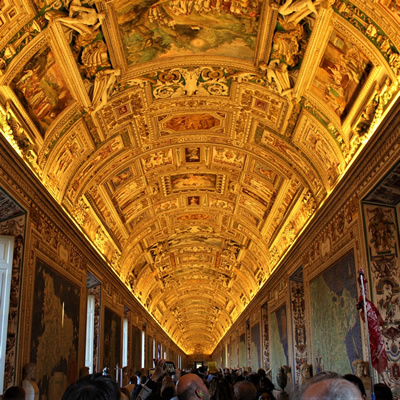
Book your entry to the Colosseum and the Vatican Museums with an audio guide
Purchase a combined ticket to visit Rome's two most famous attractions. Select your preferred date and time to skip the line.
Book your visitHow to plan a walking tour
Most of the attractions near the Colosseum are within walking distance, so there is no need to use public transport. We recommend to choose a few key stops, bearing in mind the time available and your desired pace.
A well-planned route enables you to alternate between archaeological sites, museums and open spaces, ensuring a more balanced day.
How much time should I allow for exploring the area around the Colosseum?
To explore the main attractions near the Colosseum, you should set aside at least half a day, or a full day if you want to visit more sites. Trying to fit in too many visits in a few hours is likely to be tiring.
Many visitors choose to focus on the Colosseum, Roman Forum and Palatine Hill in a single day, adding one or two other attractions.
Frequently Asked Questions
The Roman Forum, the Palatine Hill and the Arch of Constantine are right next to it.
Absolutely! Since the Forum, Palatine Hill, and Arch of Constantine share the same archaeological park, they are designed to be explored together in one go.
The length of the visit depends on the route you choose, ranging from an hour to several hours.
Yes, entry is only permitted as part of organized tours at fixed times.
Yes, they are, as they offer an excellent introduction to the history of Rome, complementing a visit to the archaeological site.